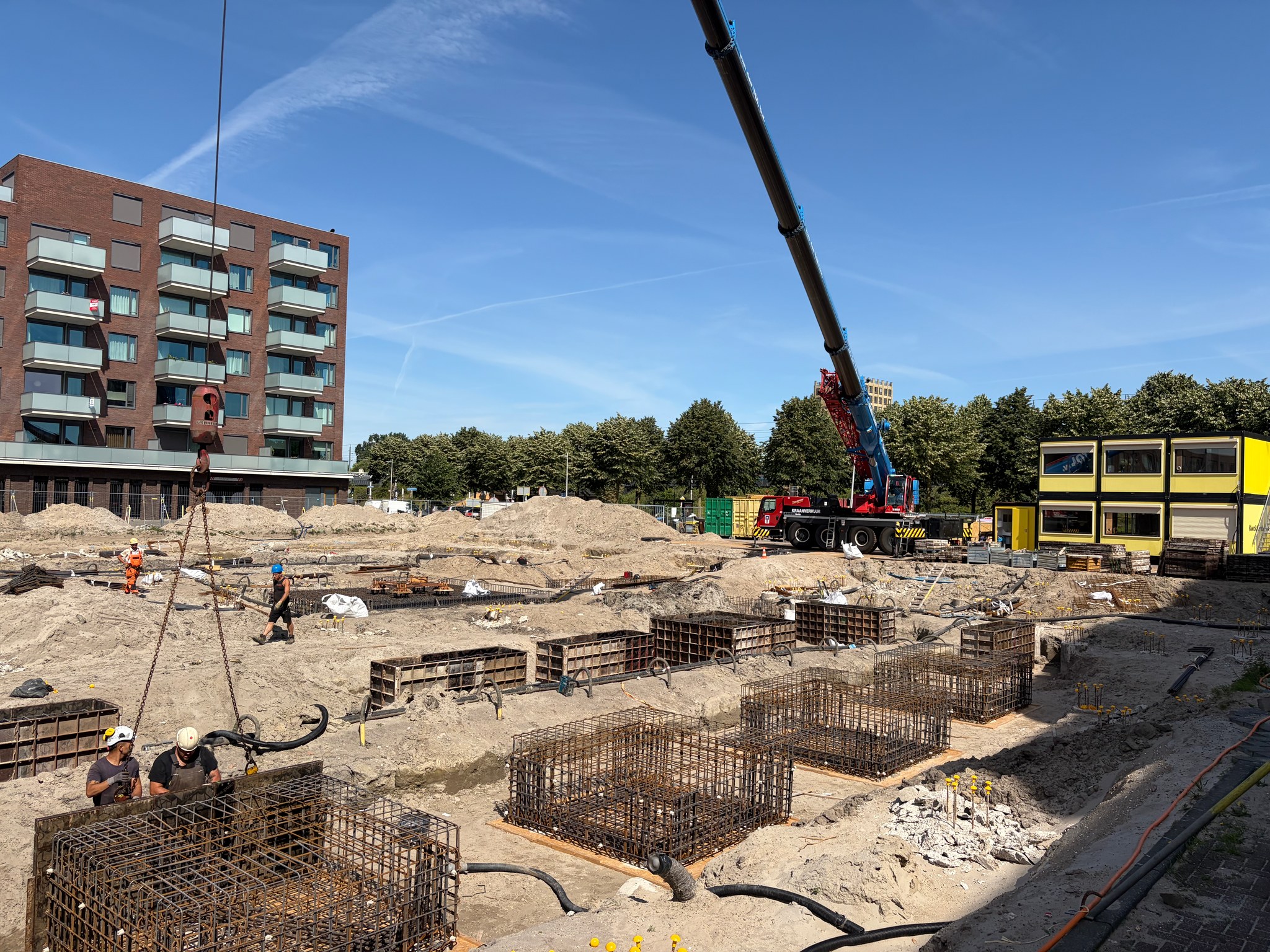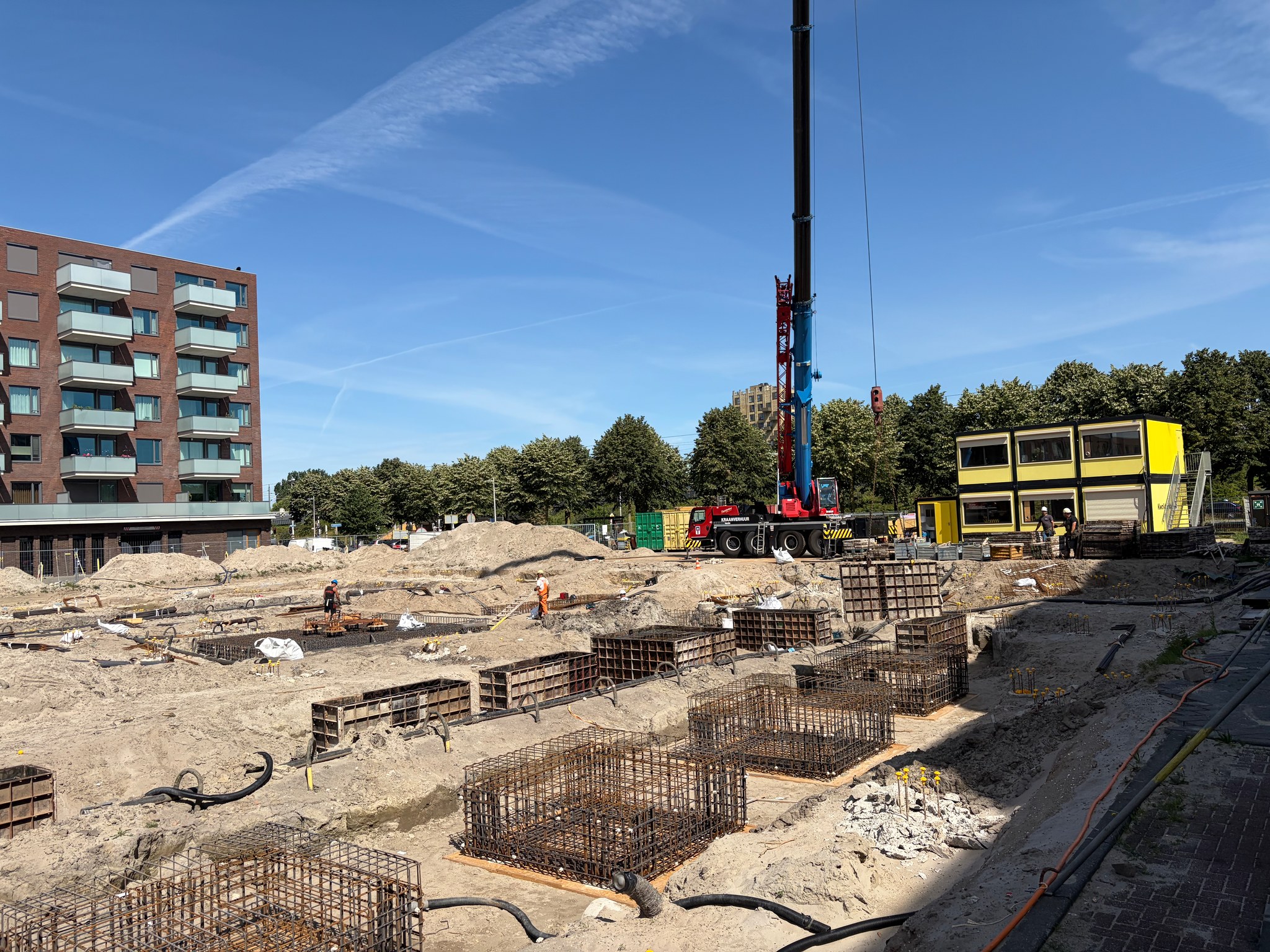
Week 28, 2026 – Rebar cages placed across the full site
Tuesday 7 July and the pace has shifted up a gear. A mobile crane — red and blue, Kraanverhuur livery — takes up position near the yellow site office and gets to work. Its job: lifting prefabricated rebar cages one by one from the laydown area and setting them into the waiting pile-cap positions across the pit. The cages are large and square, their steel bars tied in dense grids. By mid-morning a whole field of them sits in place, glinting in the July sun. From the street you can already read the grid of the future building in the pattern of the steel boxes spread across the sand.
The close-up view shows the precision of the operation. Two workers in hard hats steady each cage as it swings down on the hook chain — one at each side, hands on the steel, guiding it the last few centimetres into the exact position on the plywood base. The yellow-capped rebar stubs from the cured pile caps below thread up through the cage grid, tying old concrete to new steel. The crane operator, invisible above, lowers the load with millimetre patience while the workers signal with their hands. It is the kind of work that looks easy from the street but takes all of the team’s concentration to get right.
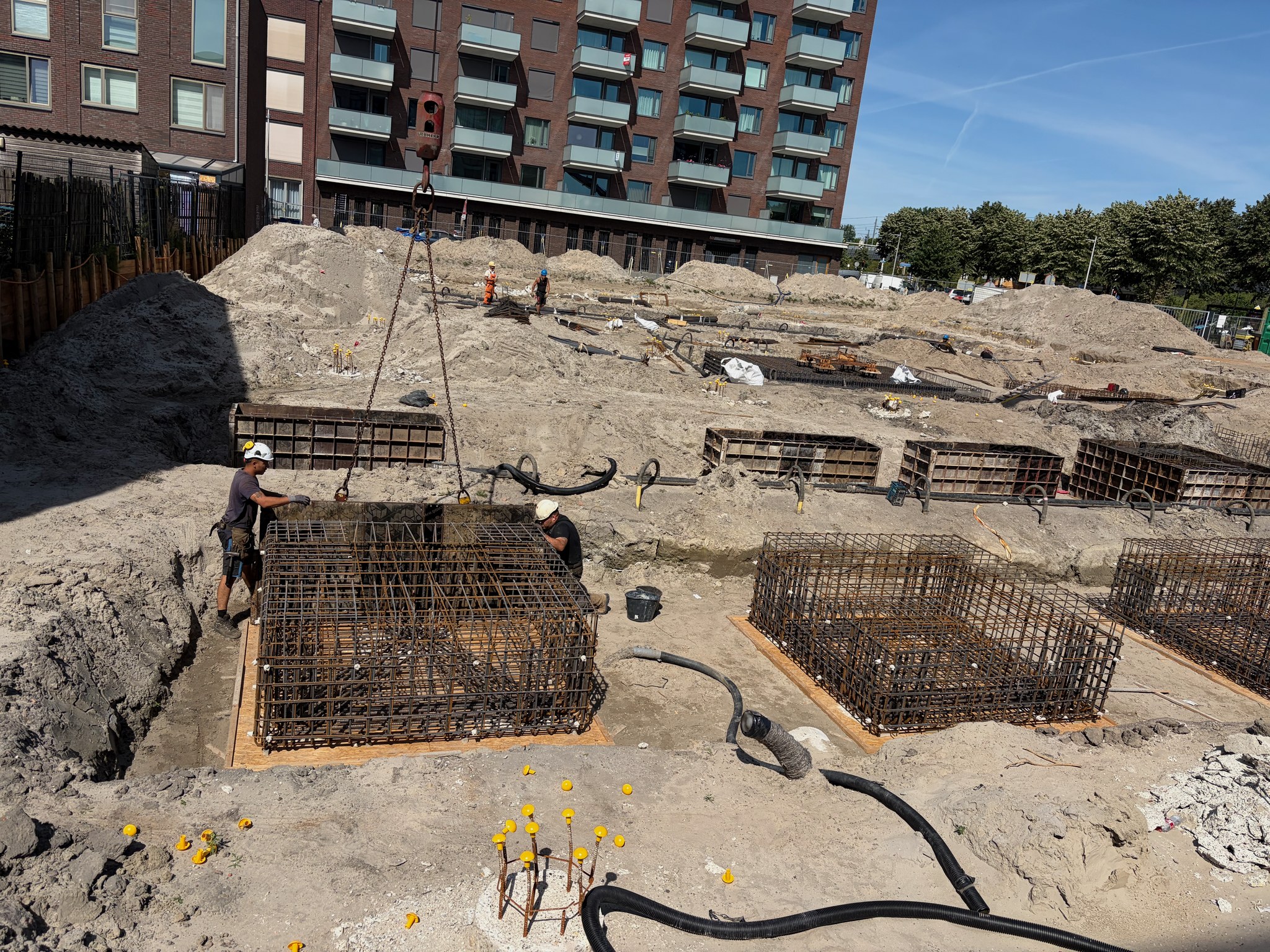
Stepping back to take in the full site, the crane boom sweeps across the sky above a sea of steel. Every pile-cap position across the building footprint now has its cage in place or is about to receive one. The mobile crane works methodically from one end to the other, the Kraanverhuur cab swivelling left and right between picks. Workers fan out across the pit, each pair ready to receive the next drop. Once this final row of cages is placed, the whole site will be ready for the next pour — another batch of concrete to lock steel to the ground.